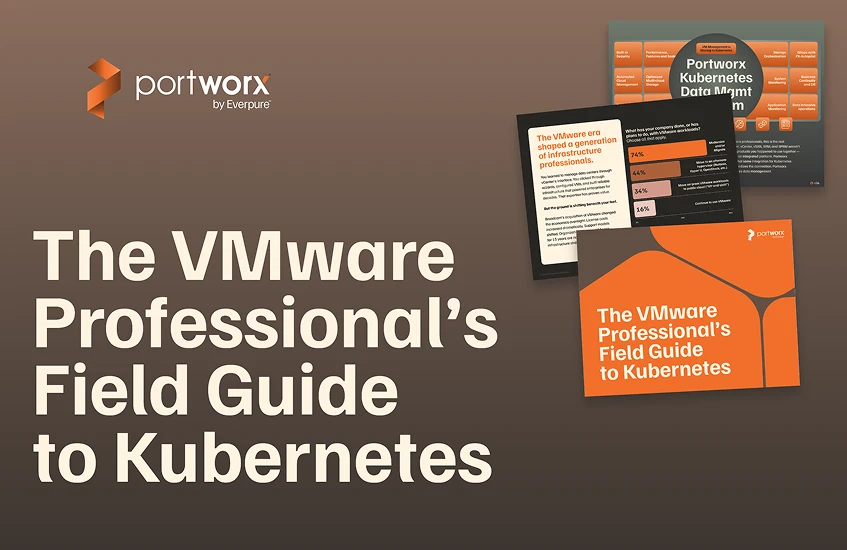
Learn how to transition your VMware skills to Kubernetes without starting over.
VMware is changing. Costs are rising and teams are being pushed to rethink their infrastructure. Kubernetes is becoming the new control plane for running both applications and virtual machines. This is not a reset. If you manage vSphere today, you already understand the core concepts. Compute, storage, networking, and high availability all carry forward.
This guide shows you how to map what you know to Kubernetes and how to start the transition without disrupting production.
What You’ll Learn
- How VMware concepts map directly to Kubernetes
- What happens to VMs, storage, and networking
- How to run VMs and containers on one platform
- A practical path to move beyond VMware
Table of Contents
– Chapter 1: ClickOps to GitOps: How your workflow changes
– Chapter 2: KubeVirt: Running your VMs on Kubernetes
– Chapter 3: Mapping the Stack: SDDC to Cloud Native
– Chapter 4: Compute: From ESXi Hosts to Kubernetes Nodes
– Chapter 5: Storage: From vSAN to Container-Native Storage
– Chapter 6: Networking: From NSX to Kubernetes Networking
– Chapter 7: Security: Translating your vSphere Security Practices
– Chapter 8: Day Two Operations: Keeping it all running
– Chapter 9: The Migration Journey: Your Migration Playbook
– Chapter 10: What’s Next: Your Cloud-Native Roadmap
– Chapter 11: The Data Layer: From vSphere to Portworx